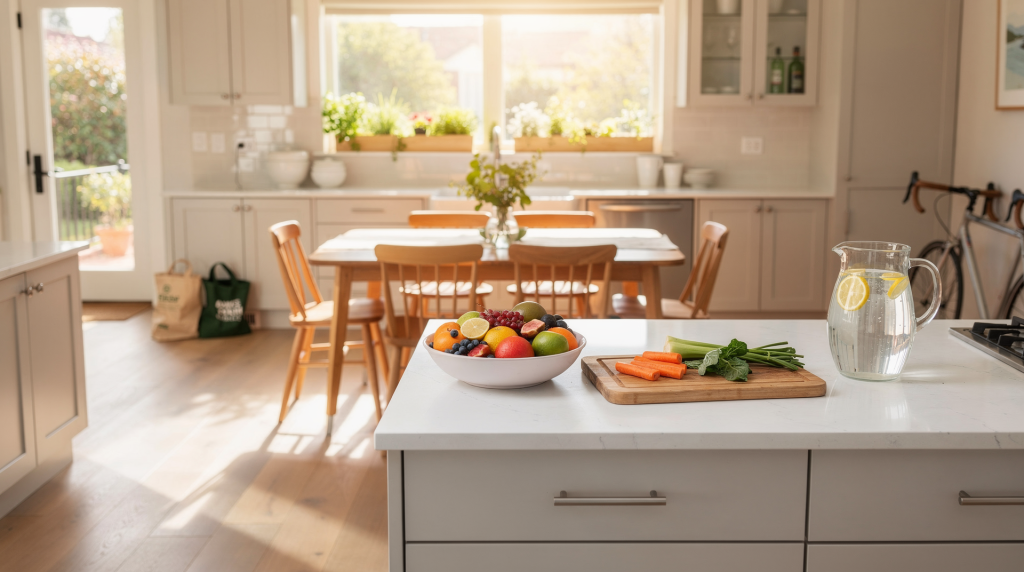
A home that supports health isn’t defined by a single feature—it’s a system of small, deliberate choices that shape your daily defaults. Years of studying how diet and environment influence blood sugar taught me that willpower is a fragile resource; what truly drives lasting change is an environment that makes the healthier path the path of least resistance. The best design doesn’t ask you to be disciplined every moment. It quietly arranges your surroundings so that cooking a real meal, moving your body, winding down for sleep, and breathing clean air feel like the most natural things in the world.
Why Home Design Shapes Habits
Most people think of health as a matter of discipline. In reality, environment does a lot of the work. If snacks are visible, if the kitchen is awkward, if the bedroom is too bright, and if every daily task requires extra friction, unhealthy habits become the default. A well-designed home reduces that friction.
This is the same principle I’ve seen in nutrition: when you keep a fruit bowl on the counter and hide the ultra-processed snacks, your choices shift without a single moment of white-knuckling. Your home operates the same way. It’s a silent architecture of cues. Good light, clean air, intuitive storage, and a layout that supports movement can influence everything from food choices to sleep quality and stress levels. A healthy home becomes a kind of silent coach—one that works with your biology, not against it.
The 5 Design Principles of a Health-Supportive Home
Before you start changing furniture or buying new products, use this simple framework. These five principles work as layers, each reinforcing the others.
| Principle | What it means | Health effect |
|---|---|---|
| Air quality | Consistent fresh air exchange, low-VOC materials, balanced humidity | Reduced respiratory irritation, deeper breathing, stable thermal comfort |
| Light | Strong daylight and good evening darkness | Better sleep, mood, and daily energy |
| Flow | Logical room layout and easy movement | Less stress, more activity, fewer skipped routines |
| Visibility | Healthy options are easy to see and reach | Better food and hydration choices |
| Recovery | Spaces that help you rest and reset | Lower stress and better nervous system balance |
Start With Air: The Foundation of a Healthy Home
If the air is stale, everything else gets harder. Good ventilation matters because it helps remove indoor pollutants, excess moisture, and odors that can make a home feel heavy and uncomfortable. When possible, bring in fresh outdoor air by opening windows or using a ventilation system that exchanges indoor and outdoor air. I’ve seen how poor air quality can subtly raise cortisol and disrupt sleep—two things that directly impact metabolic health. Clean air is the invisible foundation you feel before you notice it.
What to prioritize
- Open windows for at least 10–15 minutes daily, even in cooler months, to flush out accumulated CO₂ and indoor pollutants—assuming outdoor air quality is acceptable.
- Run exhaust fans during and after cooking or showering to pull moisture and particulates out before they settle.
- When painting or renovating, specify low-VOC or zero-VOC products; off-gassing from conventional finishes can linger for months and subtly irritate airways.
- Keep strongly scented cleaners, solvents, and air fresheners out of main living spaces—or better, switch to fragrance-free alternatives. Synthetic fragrances often contain phthalates and volatile organic compounds that degrade indoor air.
- Aim for indoor humidity between 30–50%. In damp climates, a dehumidifier in basements or bathrooms can prevent mold, which is a common trigger for respiratory issues and inflammation.
Common mistakes
- Super-insulating a home without a balanced ventilation system (like an ERV/HRV) traps stale air and moisture.
- Masking musty smells with plug-in air fresheners doesn’t solve the underlying moisture problem—it just adds more chemicals.
- Labels like “natural” or “green” aren’t regulated for indoor air safety. Always check for third-party certifications or ingredient transparency.
- Condensation on windows signals high indoor humidity and poor ventilation—address it before mold takes hold.
Quick air-quality checklist
- Walk through the home: does it smell neutral or slightly fresh without any synthetic scent? A clean, healthy home shouldn’t need fragrance to feel inviting.
- Are bathrooms vented properly, with fans that exhaust to the outside?
- Is there visible mold, mildew, or peeling paint—especially in corners or behind furniture?
- Can the home get regular cross-ventilation by opening windows on opposite sides?
- Are primary finishes—paints, flooring, adhesives—low in VOCs?
Use Light to Support Better Sleep and Better Moods
Natural light is one of the most underrated health tools in home design. Daylight helps regulate sleep-wake rhythms, supports mood, and makes the home feel more spacious and inviting. In practice, that means putting daylight where you actually live—not just where it looks good in photos. Morning light, in particular, anchors your circadian clock and can improve insulin sensitivity, which is something I’ve come to appreciate deeply from my work in metabolic health.
Design moves that help
- Choose curtains or blinds that you can fully open with one motion; the goal is to flood the room with morning light, which anchors your circadian clock and supports healthy cortisol patterns.
- Position your desk perpendicular to a window to get daylight without direct glare, reducing eye strain and boosting alertness during afternoon slumps.
- Soft white or pale walls can bounce daylight further into a room, effectively extending the reach of natural light without adding fixtures.
- In darker hallways or bathrooms, a solar tube or frosted interior window can borrow light from adjacent rooms, reducing the need for artificial lighting during the day.
- Darkness is a biological signal for melatonin production. Even small LED lights from electronics can disrupt sleep; use blackout liners and cover indicator lights.
Best rooms for daylight
- Kitchen: morning light here helps you feel awake and motivated to prepare a proper breakfast, setting a positive tone for the day.
- Home office: daylight exposure during work hours reduces afternoon melatonin dips and helps maintain focus without relying on caffeine.
- Living room: natural light makes the space feel larger and more welcoming, subtly lifting mood during darker months.
- Breakfast area: a sunny spot for your first meal reinforces a calm, unrushed start to the day.
Watch for these issues
- Glare from direct sun on screens forces you to squint and hunch, leading to eye strain and poor posture. Use adjustable blinds or a sheer curtain to diffuse light.
- Uneven daylight distribution can make a room feel smaller and less functional. Use mirrors or light-colored furnishings to bounce light into corners.
- Even low-level light pollution from streetlamps or early dawn can fragment sleep. Blackout curtains should wrap around the window frame to block all light leaks.
- Relying on a single bright ceiling fixture creates flat, unflattering light. Layer ambient, task, and accent lighting to mimic the dynamic quality of daylight.
Make the Kitchen Work for Healthy Eating
The kitchen is the command center for metabolic health. If its layout creates friction—awkward corners, insufficient prep space, cluttered counters—cooking becomes a chore, and takeout menus start looking like the easier option. A supportive kitchen reduces decision fatigue and shortens the distance between “I should eat well” and “I can actually do that.”
A healthier kitchen layout
An efficient kitchen layout is a form of behavioral design. When the refrigerator, sink, prep zone, and stove form a logical sequence, cooking requires less mental energy, making it more likely you’ll reach for whole ingredients instead of processed shortcuts.
Ideal kitchen flow
- Retrieve ingredients from the refrigerator.
- Wash produce and rinse hands at the sink.
- Move to an uncluttered prep surface for chopping and mixing.
- Transfer to the stove or oven without crossing a busy walkway.
- Keep everyday cooking tools and staples within arm’s reach of the prep area.
Storage that supports better choices
The principle is simple: visibility drives consumption. Store whole-food staples at eye level in clear containers so they’re the first thing you see. Reserve high shelves or opaque bins for occasional treats—out of sight, out of mind.
What to store at eye level
- A bowl of fresh fruit on the counter or island
- Reusable water bottles or a filtered water pitcher in plain sight
- Glass jars of oats, nuts, seeds, lentils, and whole grains on open shelving or in a pull-out pantry
- Pre-portioned nuts, dried fruit, or homemade energy bites in transparent containers
- A crock of wooden spoons, a chef’s knife on a magnetic strip, and a cutting board always out and ready
What to move out of sight
- Candy dishes or cookie jars—if they’re out, they’ll be eaten mindlessly
- Bags of chips, sugary cereals, and packaged sweets stored in a high cabinet or behind a closed door
- Individually wrapped snack packs that encourage grabbing without thinking
- The stand mixer, deep fryer, or juicer you use once a month—store them elsewhere to free up counter space for daily tasks
Kitchen upgrades that matter most
- Under-cabinet LED strips that illuminate the work surface without casting shadows
- Deep, full-extension drawers for pots, pans, and dry goods—no more crouching and rummaging
- Pull-out shelves in pantry cabinets so nothing gets lost at the back
- At least 24 inches of clear counter on either side of the sink and stove for prep and landing space
- The work triangle should be unobstructed; if an island blocks the flow, consider a different configuration
Tip
If you find yourself dreading meal prep, audit the physical steps involved. Often, the real barrier isn’t a lack of willpower—it’s a poorly positioned trash can, a dimly lit counter, or a pantry that requires a scavenger hunt to find lentils.
Design the Bedroom for Recovery, Not Just Sleep
Restorative sleep is non-negotiable for metabolic health, cognitive function, and emotional resilience. The bedroom should signal safety and calm to the nervous system. Even small amounts of light, elevated temperature, or background noise can keep the sympathetic nervous system activated, preventing the deep sleep stages where cellular repair and memory consolidation happen.
Bedroom priorities
- Aim for 65–68°F (18–20°C); a drop in core body temperature is essential for falling and staying asleep.
- Use blackout curtains or an eye mask to achieve near-total darkness.
- A cluttered room creates low-grade cognitive load; keep surfaces clear and storage closed.
- Blue light from screens suppresses melatonin; ideally, no screens in the bedroom at all, or use amber-tinted glasses after sunset.
- Natural fibers like cotton, linen, or bamboo wick moisture and regulate temperature better than synthetics.
Simple sleep-supportive changes
- Mount blackout curtains with a wrap-around rod to block light from the sides.
- Use dimmable, warm-white bulbs (2700K or lower) in bedside lamps to encourage melatonin production.
- Charge devices outside the bedroom or at least across the room, face down, to eliminate temptation and LED glow.
- Soft, muted wall colors and a few meaningful objects create a serene backdrop without overstimulation.
- A plush rug underfoot, linen curtains, and a weighted blanket can deepen the sense of comfort and security.
Bedroom mistake to avoid
When the bedroom doubles as a home office, gym, or media room, the brain learns to associate it with wakefulness and productivity. If space is tight, use a screen or curtain to visually separate the sleep zone from other activities.
Use Layout to Encourage Movement
Daily movement isn’t just about dedicated workouts—it’s the accumulation of small, frequent activities that keep metabolism humming. This is often called NEAT (non-exercise activity thermogenesis), and your home’s layout can either support or suppress it. A well-designed home invites you to walk a few extra steps, reach a little higher, or squat to pick something up, all without thinking.
Ways to encourage more movement
- Keep everyday items like the printer, extra toilet paper, or your favorite books in a spot that requires a short walk—just make sure it doesn’t become an annoyance.
- A yoga mat unrolled in a corner, a kettlebell by the sofa, or resistance bands draped over a hook serve as visual prompts to move.
- Designate an open area of at least 6×6 feet with a non-slip surface where you can comfortably stretch or do bodyweight exercises.
- Instead of a hamper right next to the bed, place it in the closet or bathroom, adding a few extra steps to your day.
- If you have stairs, avoid the temptation to consolidate trips; take items up or down as they come, turning the staircase into a natural movement tool.
Good movement cues
- A dedicated spot for walking shoes right by the entrance makes it effortless to step outside for a quick walk.
- An unrolled exercise mat in the living room or bedroom signals that movement is welcome anytime.
- Position a comfortable chair away from the kitchen, so getting up for a snack requires a deliberate walk.
- A sit-stand desk or a high counter where you can work standing for part of the day encourages postural changes and movement.
Build a Home That Reduces Stress
Chronic low-grade stress often has environmental roots. Visual chaos, poor acoustics, and cramped layouts can keep the sympathetic nervous system subtly activated, raising cortisol and making it harder to digest food, fall asleep, or feel at ease. A home that reduces stress is one that feels legible and forgiving—where your eyes can rest and your mind doesn’t have to work to navigate the space.
What creates calm
- Horizontal surfaces free of clutter allow the brain to process the room without effort.
- When everything has a designated home, you spend less mental energy searching and tidying.
- Create at least one spot where you can sit without a screen, facing a window or a piece of art, to encourage moments of stillness.
- Wood, stone, wool, and cotton bring tactile warmth and a sense of grounding that synthetic materials often lack.
- Even a small glimpse of nature through a window can lower blood pressure and improve mood within minutes.
A useful rule
If a room triggers a subtle sigh or tightness in your chest, trust that signal. Remove everything that isn’t essential or beautiful, then reassess. Often, the most calming intervention is subtraction.
A Practical Room-by-Room Plan
Entryway
- Install hooks, a bench, and a shoe rack to create a designated landing zone. This prevents clutter from migrating into the house and makes leaving for a walk feel effortless.
- A visible water bottle reminds you to hydrate before heading out; walking shoes by the door lower the barrier to an impromptu stroll.
- If the entry collects mail, keys, and random items, add a small tray or wall organizer to contain the chaos.
Kitchen
- Use countertop fruit bowls, open shelving for grains, and a prominently placed water filter.
- Store knives, cutting boards, and mixing bowls within easy reach of the main prep area.
- Layered lighting—under-cabinet task lights plus a warm overhead fixture—makes the kitchen feel inviting rather than utilitarian.
Living room
- Define zones with rugs or furniture arrangement: a conversation area, a reading nook with good light, and an open space for stretching or play.
- Hide cords, limit visible screens to one, and use closed storage for media accessories.
- Keep windows unobstructed; use sheer curtains if privacy is needed.
Bedroom
- Invest in blackout curtains and consider a white noise machine if outside noise is an issue.
- No laptops, files, or exercise equipment in the sleep zone.
- Stick to a minimal palette and breathable bedding.
Bathroom
- Run the exhaust fan during and for 20 minutes after showers; if mold is a recurring issue, consider a dehumidifier.
- Use drawer dividers or wall-mounted dispensers to keep counters clear.
- Choose fragrance-free soaps, cleaners, and laundry detergents to reduce chemical load.
Healthy Home Upgrades Ranked by Impact
If you cannot do everything at once, start here.
| Priority | Upgrade | Why it matters |
|---|---|---|
| 1 | Improve ventilation | Reduces indoor pollutants, CO₂ buildup, and moisture, directly impacting cognitive function and respiratory health. |
| 2 | Maximize daylight | Anchors circadian rhythms, boosts daytime alertness, and supports healthy melatonin production at night. |
| 3 | Simplify kitchen storage | Removes friction from meal prep, making whole-food cooking the default. |
| 4 | Darken the bedroom | Promotes deeper, uninterrupted sleep by supporting natural melatonin release. |
| 5 | Reduce clutter | Lowers cognitive load and creates a sense of order that calms the nervous system. |
| 6 | Use low-VOC materials | Minimizes off-gassing from paints, furniture, and finishes that can irritate airways and contribute to chronic inflammation. |
| 7 | Add movement cues | Integrates physical activity into daily routines, boosting NEAT and overall energy expenditure. |
Step-by-Step: How to Redesign Your Home for Better Habits
- Do a walkthrough at different times of day and observe where you reach for unhealthy snacks, skip a workout, or feel tension. These are friction points.
- Pinpoint the one area that, if improved, would have the greatest ripple effect on your wellbeing.
- Start with the upgrade that addresses that primary friction point—don’t try to overhaul everything at once.
- Apply the visibility principle: place water, fruit, and movement gear in your direct line of sight and reach.
- Put away or donate items that cue mindless snacking, screen time, or sedentary behavior.
- Live with the changes for a week, then reassess. Small tweaks—like moving a lamp or relocating a basket—can make a big difference.
Typical Mistakes People Make
- Purchasing decorative items before resolving fundamental layout flaws—pretty pillows won’t fix a cramped kitchen.
- Relying on attractive bins to mask a lack of functional storage; eventually the clutter overflows.
- Optimizing the bedroom for sleep but neglecting the living room’s harsh lighting that disrupts evening wind-down.
- Filling the home with air purifiers, smart lights, and sleep trackers without addressing basic ventilation or darkness.
- Assuming that a beautiful space will magically inspire healthy habits; design must actively reduce friction, not just look good.
A Healthy Home Audit Checklist
- The air feels clean and moves gently; there’s no stale or musty odor.
- Prep surfaces are clear, tools are accessible, and the workflow feels intuitive.
- Whole foods are the first thing you see when you enter the kitchen.
- At night, the bedroom is pitch black, silent, and comfortably cool.
- Living areas feel bright and inviting during the day without relying on artificial light.
- Surfaces are mostly clear, and items have designated homes.
- Recent renovations or furnishings used low-VOC products; the home doesn’t have a strong chemical smell.
- Daily routines naturally involve walking, reaching, and changing postures.
Conclusion
A health-supportive home isn’t about achieving a flawless aesthetic or buying every wellness gadget. It’s about methodically removing the small obstacles that stand between you and better daily choices. When your environment consistently nudges you toward fresh air, restorative sleep, nourishing food, and gentle movement, those behaviors become your baseline. And that’s the quiet power of design: it transforms fleeting intentions into the fabric of everyday life. In a world that often treats health as a series of heroic efforts, your home can be the steady, silent partner that makes well-being feel effortless.
FAQ
What is the most important feature of a healthy home? Air quality is foundational because it affects every system in the body. Poor ventilation allows CO₂, volatile organic compounds, and mold spores to accumulate, which can impair cognitive function, disrupt sleep, and trigger inflammation. Start with fresh air, then layer on other improvements.
How can I make healthy eating easier at home? Apply the visibility principle: store whole foods in clear containers at eye level, keep a fruit bowl on the counter, and arrange your kitchen so the path from fridge to prep to stove is seamless. When cooking feels effortless, you’re far more likely to reach for ingredients than a takeout menu.
Do I need a full remodel to improve my home’s health impact? Not at all. Many of the most impactful upgrades—like opening windows daily, swapping light bulbs, decluttering surfaces, and rearranging storage—cost little to nothing. Focus on friction points before considering major renovations.
What room should I improve first? Identify the room where your health habits most often derail. If you struggle with late-night snacking or poor sleep, prioritize the bedroom. If cooking feels like a burden, start with the kitchen. Address the bottleneck that will give you the greatest return.
How does home design affect behavior? Design shapes the default path of least resistance. When the healthy choice is the convenient choice—when water is more visible than soda, when a yoga mat is already unrolled, when the bedroom is truly dark—you conserve willpower for decisions that matter. Over time, these environmental nudges compound into lasting habits.