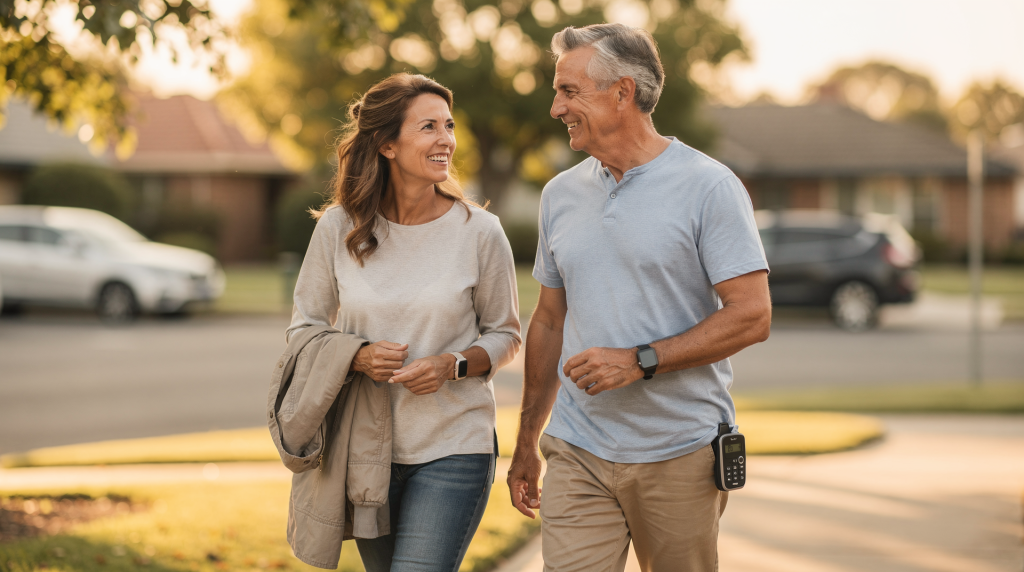
The short answer is yes—and the effect is more immediate than most people realize. Walking soon after a meal reduces post‑meal blood sugar spikes, and research consistently shows the benefit is strongest when you start moving within those first minutes after you put down your fork. For me, this simple habit is a perfect illustration of why the environment you live in matters as much as the food you eat. You can know all the science about post‑meal glucose responses, but if your neighborhood doesn’t make it easy to step outside for a five‑minute stroll, that knowledge stays theoretical.
Choosing a home where a short walk feels natural and safe isn’t a luxury; it’s one of the most underused layers of preventive metabolic care.
Why Post-Meal Walking Works
After you eat, blood glucose climbs and typically peaks somewhere between 30 and 90 minutes later. If you stay seated, that rise can be sharp and prolonged. When you walk, your muscles work as a sponge—they take up glucose directly from the bloodstream, using pathways that don’t depend entirely on insulin. The result is a smaller, shorter glucose excursion, which means less demand on your pancreas and steadier energy throughout the afternoon.
Timing is everything here. Starting the walk while blood sugar is still rising—not an hour later—gives you the largest blunting effect. This is one reason why living in a walkable area, where you can slip out the door immediately, turns a good intention into a reliable habit.
What the Research Shows
The evidence is remarkably consistent. Multiple studies and clinical summaries point in the same direction:
- A short walk after eating can blunt the glucose spike and keep insulin levels steadier.
- A 30‑minute walk started immediately after a meal significantly reduced the glucose peak in healthy participants.
- A systematic review found the best acute glycemic benefit came from exercise performed as soon as possible after eating.
- Even a 5‑minute walk after a meal showed measurable blood sugar benefits in a clinical summary from UCLA Health.
- A brief 10‑minute walk immediately after a meal appears equally effective and feasible for managing post‑meal hyperglycemia.
What strikes me isn’t the volume of data but its practical clarity: you don’t need a gym. You need a door you actually want to walk out of—and a neighborhood designed to reward you when you do.
How Long Should You Walk After Eating?
There’s no single magic number, but the following ranges provide a useful framework. The goal is to interrupt prolonged sitting and engage large muscle groups while post‑meal glucose is on the rise.
| Walking plan | What it may do | Best for |
|---|---|---|
| 2–5 minutes right after eating | Small but measurable reduction in the post‑meal spike | Busy days, beginners, habit‑building |
| 10 minutes after a meal | Practical glucose support with low barrier to adherence | Most people looking for an easy routine |
| 15–30 minutes after a meal | Stronger effect on the glucose peak | People focused on tighter post‑meal control |
Even two minutes of light walking can nudge your glucose curve in a healthier direction. The deciding factor is often where you live: a five‑minute loop around a quiet block, a footpath along a community garden, or simply a covered porch where you can pace while on a phone call.
Best Timing: Before, After, or Later?
Walking after a meal consistently outperforms walking before a meal for controlling the immediate glucose rise. The window of opportunity is narrow—moving during the early postprandial phase, when glucose is still climbing, gives you the biggest advantage. Waiting an hour typically misses the peak.
A practical rhythm looks like this: eat, pause only briefly if needed, walk for a few minutes, then return to your day. If your home sits on a street with sidewalks and shade, this rhythm becomes almost automatic. If it sits on a busy arterial road without a safe walking path, even the best intentions tend to collapse.
Who May Benefit Most
Post‑meal walking is especially helpful for people with prediabetes, type 2 diabetes, and anyone who experiences energy crashes after larger meals. It’s also valuable for those without diagnosed conditions, simply softening normal post‑meal glucose swings that contribute to brain fog and sugar cravings.
If your daily life involves long stretches of sitting—desk work, commuting, and then an evening on the couch—a short walk after lunch or dinner can act as a metabolic circuit breaker. The more your home and neighborhood support that small act, the more likely you are to keep doing it.
Important Safety Notes
Walking after meals is low risk for most people, but a few situations require extra attention:
- If you use insulin or medications that can cause low blood sugar, monitor your levels carefully and discuss your routine with your healthcare provider.
- If you have type 1 diabetes, check your glucose before, during, and after exercise as recommended.
- If you feel dizzy, weak, or unwell after eating, stop and reassess.
- If you have mobility issues or balance concerns, choose a safe route, an indoor walking path, or a companion.
A gentle post‑meal walk is generally less likely to provoke hypoglycemia than intense exercise, but medication type, dose, and meal composition all play a role. When in doubt, personalize the approach—and pick an environment that minimizes obstacles.
Easy Ways to Make It a Habit
The simplest strategies are usually the most sustainable. Look for low‑friction ways to move right after a meal:
- Walk around the block after dinner—and if you’re house‑hunting, consider whether your potential block invites that.
- Pace indoors for 5–10 minutes while tidying up or taking a phone call.
- Park farther away when eating out and walk back to your car at a relaxed pace.
- Make a quick post‑lunch walk part of your workday culture, whether you’re in an office or working remotely.
- Households with land or a garden can turn after‑meal strolls into an opportunity to check on plants or simply enjoy fresh air.
You don’t need speed. The physiological goal is to activate large muscles soon after the meal. The behavioral goal is to place yourself in an environment that whispers “just step outside” instead of one that keeps you pinned to a chair.
Common Mistakes
- Waiting an hour or more before walking, which misses the early glucose peak.
- Turning the walk into an intense workout right after a large meal—uncomfortable and unnecessary.
- Believing one walk can “cancel out” a consistently poor dietary pattern.
- Ignoring medication‑related low blood sugar risk.
- Being inconsistent—expecting the metabolic benefit of a daily habit from a once‑a‑week effort.
- Underestimating the role of place: if you live on a noisy highway with no footpaths, a post‑meal walk is far less likely to happen, which quietly erodes the habit.
Bottom Line
Walking after meals is one of the clearest, most accessible ways to soften post‑meal glucose spikes. The evidence is robust, the risk is low, and the habit requires almost no equipment. The single most important detail is to start soon after eating and to repeat it consistently.
Where you live largely determines whether that consistency is effortless or an uphill battle. A home on a walkable street, in a neighborhood with parks and quiet loops, or on a piece of land where a post‑dinner stroll feels like a small daily pleasure—these are not merely lifestyle add‑ons. They are health decisions, just as real as the food on your plate.
FAQ
How soon after eating should I walk?
As soon as practical after the meal, since the early post‑meal period appears to give the strongest benefit. The goal is to move while glucose is still rising, which means waiting only a few minutes at most—ideally just long enough to put your dishes away and step out the door.
Is a 10-minute walk enough?
Yes, a 10‑minute walk immediately after eating can be a realistic and effective option for many people. The key is consistency and the quality of the environment that supports that consistency. A safe, pleasant 10‑minute loop near your home is worth far more than a 30‑minute walk you rarely take.
Do I need a brisk walk?
Not necessarily. Even light walking helps, though longer or somewhat more structured walking may have a larger effect. The primary mechanism is muscle activation, not heart‑rate elevation, so a comfortable stroll still moves the needle on post‑meal glucose.
Is walking after dinner better than walking before bed?
Walking after dinner is usually more useful for flattening the meal‑related glucose rise than waiting until much later. Glucose peaks earlier than many people assume; moving shortly after the meal captures that window, while a bedtime walk often occurs well after the glucose excursion has already taken place.
Is it safe for people with diabetes?
Often yes, but medication use matters significantly. People taking insulin or other glucose‑lowering drugs should monitor their levels carefully and follow individualized advice from their care team. A mild post‑meal walk is generally well tolerated and can be integrated safely when done with awareness of medication timing and meal composition.