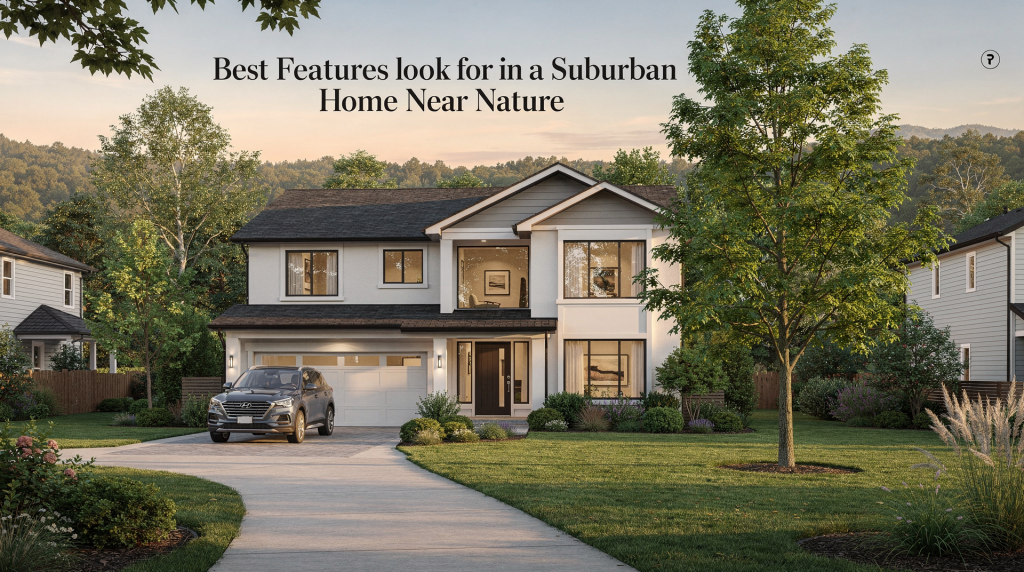
A suburban home near nature offers far more than a pleasing view from the kitchen window. The properties that truly earn their keep are the ones that weave the outdoors into your daily rhythm—encouraging movement, lowering cortisol, and shaping a healthier, more grounded routine for everyone under the roof. When you’re comparing homes in English suburbs, look past the listing photos and ask how the house will actually help you live closer to nature, not just look at it.
Why “near nature” matters more than a scenic backdrop
Proximity to a park or woodland doesn’t automatically translate into a nature-connected life. I’ve seen homes that sit right beside a greenbelt yet feel hemmed in by poor layout or a busy road severing the route. The real magic happens when the house, the garden, and the surrounding neighbourhood conspire to make stepping outside the easiest, most natural choice you make all day. The best properties blend generous gardens, tree-lined streets, preserved open spaces, and direct, traffic-free access to walking paths or recreational areas.
From a wellness perspective, this isn’t just about aesthetics—it’s about better air circulation, more spontaneous movement, and a sensory environment that helps your nervous system downshift. When you can walk to a trail instead of driving to one, outdoor time stops being a scheduled event and becomes part of your body’s daily reset. In my years studying how diet and lifestyle influence metabolic health, I learned that the simplest changes—like a short walk after a meal—can have profound effects on blood sugar regulation. A home that places a footpath at your doorstep makes that habit effortless, not aspirational.
What to check:
- Is the nearest green space walkable, or does it require a car journey?
- Can you reach it without crossing a dangerous junction or major thoroughfare?
- Are there continuous pavements or dedicated paths that make the journey feel safe, not stressful?
- Does the neighbourhood link into a wider network of trails, so a morning walk can become a longer ramble without planning?
The most important features to look for
1. Direct access to green space
A home’s value multiplies when nature is woven into the fabric of daily life, not just framed by a distant view. Prioritise properties that sit adjacent to parks, forest preserves, trails, lakes, or green belts—ideally where those spaces bleed into the neighbourhood without a major road severing the connection. The difference between a home that feels restorative and one that feels isolated often comes down to whether you can walk out your door and onto a path within minutes, or whether you have to buckle up and drive.
What to check:
- Is the nearest green space reachable on foot in under ten minutes?
- Are there safe, well-maintained footpaths or crossings?
- Does the neighbourhood connect to a larger trail network, or is it a dead-end pocket of green?
- Is the route pleasant enough that you’d actually use it daily, in all seasons?
2. A usable backyard, not just a lawn
A sprawling lawn might look impressive in photographs, but if it’s too sloped to stand on, lacks privacy, or demands constant mowing, it rarely contributes to your wellbeing. The best suburban gardens function as an extra living room—a place where you can dine, potter, let children or pets roam, or simply sit with a cup of tea and feel held by greenery. I’ve found that a modest, well-designed outdoor space almost always trumps a vast, featureless expanse.
Look for:
- Flat or gently sloping ground that invites use, not just admiration.
- Enough screening from neighbouring homes to create a sense of retreat.
- Room for a patio, a fire pit, raised beds, or a quiet seating nook.
- Mature trees or structural planting that provide natural shade and a feeling of enclosure.
- Landscaping that feels intentional but not high-maintenance—native plants and robust shrubs often signal a garden that works with the local climate, not against it.
3. Good indoor-outdoor flow
Homes that genuinely connect you to nature don’t trap you inside. They invite movement between the kitchen, the living area, and the garden through wide openings, level thresholds, and sheltered outdoor spots. This isn’t just about entertaining; it’s about how easily you can step outside to feel the sun on your skin or breathe fresh air between tasks—a micro-restorative practice that research links to lower stress and better cognitive function.
Strong signs include:
- Sliding or French doors that open directly onto a patio or deck.
- A deck or terrace positioned off the kitchen or main living room, so you naturally flow outside.
- Covered outdoor seating that works even in light rain—extending the usable season.
- Wide windows that frame trees or open land, blurring the boundary between inside and out.
- An easy, step-free route from the main social spaces to the garden.
4. Natural views from the main rooms
A suburban home near nature should reward you where you spend the most time: the kitchen, living room, and primary bedroom. Homes positioned against woodland, open fields, or landscaped greenways often feel quieter and more restorative because your eye has somewhere to rest. This isn’t about a postcard panorama; it’s about what you see when you’re washing up, working at the dining table, or waking up in the morning. A view of a brick wall or a busy driveway can subtly drain your mental energy over time.
A good rule: stand in the rooms you’ll use every day and check what fills the window. A backyard fence softened by planting is fine. A blank wall or a constant stream of cars is not ideal if your goal is a nature-oriented lifestyle.
5. Tree cover and mature landscaping
Trees do far more than boost curb appeal. They create a cooler microclimate, filter airborne pollutants, and provide a visual buffer that reduces mental fatigue—a benefit I’ve come to appreciate deeply since moving from a concrete-heavy city to a tree-filled town. Tree-lined streets and established planting are often markers of a suburb designed with long-term liveability in mind, not just quick development.
Look for:
- Mature street trees that form a canopy—this usually indicates a settled, cared-for neighbourhood.
- Native plants and hedgerows that support local wildlife and require less intervention.
- Healthy buffer planting that gives privacy without feeling fortress-like.
- Shade that falls over windows and patios during the hottest part of the day, reducing the need for air conditioning.
- Landscaping that feels rooted and layered, not overly manicured or sterile.
6. A quiet street with low traffic
If nature is the main draw, traffic noise can unravel the entire experience. Peaceful living is one of the primary reasons buyers seek out suburban homes near parks or open space, yet I’ve visited properties where the constant hum of a nearby A-road made the garden unusable. Having spent years researching how chronic noise elevates cortisol and disrupts metabolic health, I can’t overstate the value of a genuinely quiet street. Your nervous system registers background noise even when you’re not consciously aware of it, and over time that takes a toll on sleep quality, blood pressure, and overall resilience.
Check for:
- Cul-de-sacs or streets with very low through-traffic.
- A generous setback from major roads—ideally with a buffer of trees or earth.
- Minimal commuter cut-through traffic, especially during rush hours.
- Distance from schools, bus routes, or commercial strips that generate intermittent noise.
- Noise levels at different times of day: a street that seems tranquil at 11 a.m. might roar at 5 p.m.
7. Walkability for daily outdoor habits
The best nature-oriented suburbs make it easy to walk for pleasure, exercise, or even a pint of milk. Neighbourhoods with continuous pavements, looping paths, and preserved green corridors support an active lifestyle without requiring a gym membership or a car journey. This is especially important if you want nature to shape your routine rather than remain a weekend luxury. When every errand becomes a walk, you accumulate movement that benefits cardiovascular health, mood, and metabolic flexibility—the very things I used to chase with supplements and strict meal timing.
Features to prioritise:
- Pavements on both sides of the street, wide enough for two people to walk comfortably.
- Looping paths or circular routes that make a daily walk feel varied, not repetitive.
- Easy access to playgrounds, tennis courts, or sports fields—these become natural gathering points.
- Safe, well-lit routes to parks and schools, so children can move independently as they grow.
- Space for biking, whether that’s dedicated cycle lanes or quiet roads with considerate drivers.
8. Energy-efficient and healthy home design
A home near nature should also support comfort indoors. Properties with large windows, robust insulation, and smart ventilation feel brighter and healthier year-round, and they cost less to run. But beyond the utility bills, there’s a wellness argument: stable indoor temperatures and good air quality directly affect sleep, respiratory health, and even cognitive performance. I’ve learned that the same principles I applied when recommending blood-sugar-balancing supplements—consistency, reducing unnecessary stress on the body—apply to the built environment. A draughty, stuffy house undermines the restorative effect of a beautiful location.
Useful features:
- Triple-glazed or high-performance windows that keep heat in during winter and out during summer.
- Good insulation throughout the building envelope, including the loft and floors.
- Natural light that floods the main rooms without causing overheating—often achieved through careful orientation and shading.
- Efficient heating and cooling systems that maintain a steady, comfortable temperature.
- Materials that feel durable and low-odour, with minimal off-gassing from paints, carpets, or composite boards.
Features that signal a stronger long-term buy
| Feature | Why it matters | What to inspect |
|---|---|---|
| Trail or park access | Turns outdoor time from an effort into a habit; supports cardiovascular health, stress reduction, and vitamin D exposure. | Exact walking distance, road crossings, surface quality, and whether the trail connects to a wider network. |
| Mature trees | Creates a microclimate that lowers ambient temperature, filters air, and provides a visual buffer that reduces mental fatigue. | Tree species, root encroachment risk, canopy cover over key living areas, and seasonal maintenance needs. |
| Functional backyard | Expands usable living space and encourages outdoor meals, play, and relaxation—all linked to lower stress. | Layout, drainage, privacy from neighbours, and sun exposure throughout the day. |
| Indoor-outdoor flow | Makes the home feel larger and more liveable; invites spontaneous time outside, which benefits mood and circadian rhythms. | Door types, deck or patio condition, step-free access, and whether the transition feels natural. |
| Quiet street | Reduces background stress and protects sleep; chronic noise is linked to elevated cortisol and cardiovascular strain. | Traffic patterns at peak hours, proximity to bus routes or commercial zones, and sound levels inside the home with windows open. |
| Natural views | Improves everyday quality of life by giving the eyes and mind a place to rest; supports mental restoration. | Sightlines from the kitchen, living room, and main bedroom—check what you see at seated and standing height. |
| Energy-efficient windows | Supports thermal comfort and lower bills; stable indoor temperatures aid sleep and concentration. | Glazing type, seal integrity, frame material, and orientation relative to sun and wind. |
| Walkable neighbourhood | Encourages movement and convenience; reduces car dependency and builds community connection. | Sidewalk continuity, path lighting, safe crossings, and proximity to daily amenities like a shop or café. |
Common mistakes buyers make
Focusing only on “close to nature” in the listing. A property might be marketed as adjacent to parkland, but if the route involves crossing a dual carriageway or walking along a verge-less road, the daily reality will spike your stress rather than soothe it. Always walk the route yourself at different times of day, and imagine doing it in November rain or with a pushchair.
Ignoring the direction of the lot. A home can have green space nearby yet still face a parking lot, a busy road, or a neighbouring wall. The lot’s orientation affects light, privacy, and how much you actually enjoy the setting. A north-facing garden that never gets sun, or a living room that looks directly onto a neighbour’s bins, can erode the sense of retreat you’re seeking.
Overlooking maintenance costs. Nature comes with trade-offs. Large trees, expansive lawns, and open yards can mean more upkeep than you expect. Before buying, ask what it will cost to maintain landscaping, drainage, fencing, and outdoor structures. A garden that demands every Saturday morning can become a burden rather than a joy.
Assuming all green space is public and protected. Some open land may be buildable or privately owned. If the view matters to your long-term enjoyment, verify what the surrounding parcels are zoned for and whether any land is preserved by a trust or covenant. A field that’s lovely today could become a housing estate in five years.
How to evaluate a suburban home near nature step by step
- Start with the map. Pull up a detailed map—not just the estate agent’s highlight—and trace every green space, footpath, and waterway within a 15-minute walk or a 5-minute cycle. This is your wellness radius. Mark them and then verify on the ground.
- Visit at different times. Morning, afternoon, and evening conditions can vary dramatically. Listen for traffic, lawn equipment, trains, or neighbourhood noise that might not appear during a midday viewing. Pay attention to how the light moves through the house and garden.
- Walk the route to nature. Don’t just drive by. Park the car and walk exactly as you would on a typical Tuesday. Is the path pleasant? Are there any barriers, blind corners, or stretches that feel unsafe? If you wouldn’t let a child walk it alone, it’s not truly accessible.
- Inspect the outdoor space. Look for privacy, sun exposure, drainage, and room to use the yard for the things you love—whether that’s growing vegetables, doing yoga, or hosting friends. Check for standing water or signs of poor drainage after rain.
- Test the indoor views. Stand in the kitchen, living room, and bedroom. Decide whether the outlook actually feels restorative. A view of a brick wall or a busy road will grate over time, even if the garden is lovely.
- Review maintenance demands. Ask about tree care, irrigation, landscaping, and exterior upkeep. Get a sense of what a typical year of maintenance costs and effort looks like. If the garden is immaculate, find out whether that’s due to low-maintenance design or a full-time gardener.
- Think about your lifestyle. If you want morning walks, gardening, kids’ play space, or weekend outdoor hosting, make sure the home supports those habits without friction. A house that fights your routines will slowly drain your motivation.
Checklist: what to prioritize before making an offer
- Easy access to parks, trails, or preserved green space (walkable, safe, and inviting).
- A backyard you can actually use—flat, private, and with room for your preferred activities.
- Good window placement and natural light that reaches the rooms you occupy most.
- Quiet street with limited traffic, verified at multiple times of day.
- Mature trees or thoughtful landscaping that provides shade, privacy, and seasonal interest.
- Safe sidewalks or walking paths that connect to the wider neighbourhood.
- Outdoor space with enough privacy to feel like a true extension of your home.
- Efficient windows and insulation that keep the home comfortable and healthy.
- Views from the main living areas that offer a visual rest, not a source of stress.
- Reasonable maintenance requirements that match your available time and budget.
When a nature-focused suburb is the right fit
This kind of home works best if you want more daily outdoor time, a calmer environment than a dense urban setting, space for gardening, children, pets, or entertaining, and a neighbourhood that encourages walking and activity rather than car dependency. It’s for people who see their home as a foundation for daily wellbeing—where a morning walk is as routine as breakfast, and where the sound of birds replaces the hum of traffic.
It may be less ideal if you want ultra-low maintenance, fast access to city nightlife, or a very compact yard that requires almost no attention. A nature-focused suburb rewards those who are willing to engage with their surroundings, not just admire them from behind glass.
FAQ
What is the most important feature in a suburban home near nature?
In my experience, the single most transformative feature is walkable, safe access to green space. A park or trail that you can reach on foot in under ten minutes—without navigating a dangerous crossing—changes how often you use it. It shifts outdoor time from a planned excursion to a spontaneous, daily habit that supports metabolic health, mood, and sleep quality.
Is a big yard better than being close to a park?
Not always. A smaller, well-designed yard with good privacy and direct access to nearby trails can be far more useful than a large lawn that demands constant mowing and offers little sense of enclosure. Think about how you’ll actually spend your time: if you love hosting barbecues or growing vegetables, a private garden matters more; if you prefer long walks or runs, proximity to a park network might be the greater asset.
Should I prioritize trees or open views?
It depends on your goals. Trees usually offer more shade, privacy, and a calmer, cocooning atmosphere—qualities that help lower stress and keep the home cooler in summer. Open views can feel brighter and more expansive, which some people find uplifting. The best choice is often a balance of both: a framed view through mature planting, or a garden that opens onto a meadow while the house itself is sheltered by trees.
How can I tell if a neighbourhood is truly nature-friendly?
Look beyond the estate agent’s description. A truly nature-friendly suburb has continuous pavements, tree-lined streets, preserved green areas that aren’t just leftover scraps of land, low traffic speeds, and walking routes that people actually use. Visit on a Saturday morning and see whether families are out walking, cycling, or playing—that’s the real litmus test.
Do energy-efficient features matter in a nature-oriented home?
Absolutely. Good insulation, high-performance windows, and efficient heating and cooling make the home more comfortable and support the feeling of a healthy living environment. They also reduce your energy footprint, which aligns with the values many nature-oriented buyers hold. From a health perspective, stable indoor temperatures and fresh air are foundational to good sleep and daytime alertness—benefits that compound over years of living in the home.
Final takeaway
The best suburban homes near nature do more than sit in a pretty location. They make it easy to live well through usable outdoor space, quiet surroundings, good views, and a direct, walkable connection to parks, trails, or preserved green areas. When you compare properties, focus on how the home supports daily life—your morning walk, your children’s play, your need for calm after a long day—not just how it looks in the listing photos.
A truly strong choice is one that gives you nature, comfort, and practicality in the same address. It’s a home that works with your biology, not against it, and that’s an investment in your long-term vitality as much as in bricks and mortar.