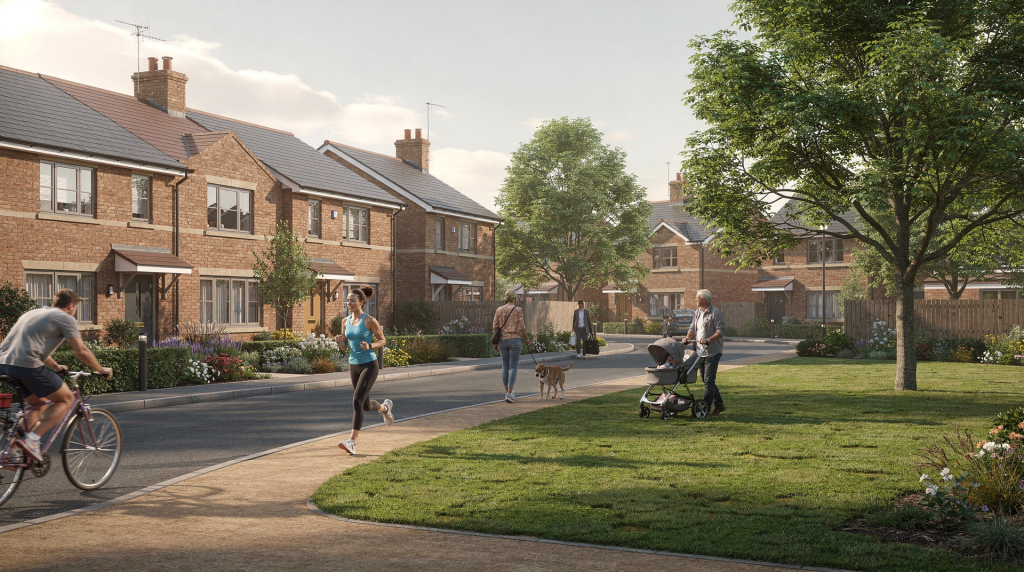
There’s a quiet but profound shift in how we understand health, and it has almost nothing to do with supplements or strict meal plans. It lives in the streets we walk, the canopy of trees that shades our morning loop, and the pocket park we pass on the way to grab coffee. When green spaces are woven into the fabric of a neighborhood—not as distant destinations but as everyday infrastructure—they don’t just beautify the area. They fundamentally reshape daily routines, making movement, rest, and connection feel less like chores and more like second nature.
I spent years studying metabolic health, writing about plant-based nutrition and the natural compounds that help regulate blood sugar. But the deeper I went, the clearer it became that environment is one of the most overlooked pieces of the wellness puzzle. You can optimize your diet and still struggle if your surroundings keep you sedentary, stressed, and disconnected from daylight. The right neighborhood, on the other hand, acts like a silent coach—nudging you toward habits that stabilize energy, improve sleep, and lower the chronic stress that drives so many modern ailments.
Research consistently shows that regular contact with nature reduces cortisol, improves mood, enhances sleep quality, and increases physical activity. But the real magic isn’t in the occasional weekend hike; it’s in the low-friction, repeatable moments that a well-designed suburb makes possible. A five-minute walk after lunch, a shaded bench where you can decompress, a trail that turns a phone call into a moving meditation—these are the building blocks of a healthier life.
Why suburban green space changes daily behavior
Green space works best when it’s practical, visible, and close enough to use without a second thought. A short walk after breakfast, a lunch break on a trail, or an evening loop around the block becomes far more likely when the route feels safe, inviting, and easy to access. The health effects ripple through several interconnected pathways:
- More movement: People walk more when routes are pleasant and destinations feel reachable. This isn’t about scheduled exercise; it’s about incidental movement that accumulates throughout the day—the kind that keeps post-meal blood sugar in check and metabolism humming.
- Less stress: Nature exposure is associated with lower perceived stress, reduced cortisol, and a calmer autonomic nervous system. Even a few minutes of greenery can shift the body out of a chronic fight-or-flight state, which matters enormously for long-term metabolic and cardiovascular health.
- Better sleep: Daylight exposure and gentle physical activity during the day help anchor circadian rhythms. Morning light, in particular, is a powerful signal for sleep-wake cycles, and a neighborhood that makes an early stroll easy is effectively a sleep aid without side effects.
- Better focus: Brief contact with nature—even a view of trees through a window—has been linked to improved attention and mental restoration. This is critical for anyone juggling work, family, and the constant pull of screens.
- Stronger social ties: Green common areas create casual meeting points that combat isolation and build community. A bench under a tree or a shared garden plot can spark the kind of low-pressure interactions that make a neighborhood feel like a support system.
How green spaces support healthier routines
1. They make walking feel automatic
In suburbs, walking is often the difference between a routine that stays sedentary and one that feels active without requiring a gym membership. A neighborhood with sidewalks, shade trees, small parks, and connected paths makes walking feel like part of life rather than a special event. This matters because routine movement tends to stick when it’s low-friction. If the easiest way to pick up coffee, walk the dog, or check the mail includes a pleasant loop outside, daily step counts rise almost by accident. From a metabolic standpoint, these short, frequent walks are gold: they help shuttle glucose into muscles, reduce post-meal spikes, and keep energy steady throughout the day.
2. They lower the mental load of the day
Natural surroundings can reduce the sense of constant alertness that many people feel in dense, noisy, highly built environments. Studies link nature exposure with lower stress, reduced blood pressure, and improved mood. That doesn’t mean a park solves every source of stress. It does mean that even short breaks in a green setting can help the nervous system downshift. Over time, this can make morning routines, transitions between work and home, and evening wind-downs feel more manageable. When your environment offers regular moments of calm, the chronic cortisol burden drops—and with it, the downstream risks of insulin resistance, belly fat accumulation, and sleep disruption.
3. They help sleep by supporting daylight and movement
Sleep is often shaped by what happens during the day. Time outdoors increases natural light exposure and often adds movement, both of which can improve sleep quality. Suburban green space can help in a practical, almost mechanical way: morning walks flood the brain with early daylight, strengthening the circadian rhythm; lunchtime outdoor breaks reduce afternoon fatigue and prevent the energy slump that leads to caffeine overuse; evening strolls help separate work from rest, signaling to the body that the day is winding down; and quieter surroundings—fewer sirens, less traffic rumble—support a calmer bedtime routine. The cumulative effect is deeper, more restorative sleep, which in turn regulates hunger hormones and glucose metabolism.
4. They encourage family-friendly habits
Green neighborhoods often make it easier for families to build repeatable routines: after-school park visits, bike rides instead of screen time, dog walks after dinner, weekend gardening or yard care, outdoor play without long drives. These habits matter because they are repeatable. A healthy routine is rarely dramatic; it is simply easier to maintain when the environment supports it. Children who grow up in walkable, green neighborhoods tend to carry those patterns into adulthood, seeing movement and time outdoors as normal, not optional.
What makes a suburban green space actually useful
Not every green area delivers the same benefits. A decorative median does less than a connected network of parks and walkable paths. When evaluating a neighborhood, look for the features that turn scenery into daily utility.
| Feature | Why it matters | Best sign |
|---|---|---|
| Connected sidewalks and paths | Transform walking from a deliberate workout into a seamless part of your day | Continuous routes that loop naturally, no abrupt dead ends |
| Mature tree cover | Provides shade and visual relief, making walks comfortable even in summer heat | Routes that stay usable on warm afternoons without feeling exposed |
| Pocket parks | Offer immediate access to green space for micro-breaks, play, or quiet moments | At least one within a 5–10 minute walk from your front door |
| Trails or greenways | Support longer, uninterrupted walks or runs that feel like an escape | Safe, car-free connections that extend beyond a single block |
| Low traffic speeds | Make walking and biking feel safe, especially for children and older adults | Narrower roads, traffic-calming measures, and well-marked crossings |
| Open gathering spaces | Encourage spontaneous social interaction and a sense of community | Benches, lawns, or small plazas that invite lingering |
| Good lighting | Extends the usable hours of green spaces into early morning and evening | Even, warm-toned lighting along paths, not just street intersections |
The key question is simple: can a resident use the space on an ordinary Tuesday, not just on a perfect Saturday? If the answer is no, the green space is decoration, not infrastructure.
A practical routine built around suburban green space
A good neighborhood can support better habits, but the habit still needs structure. Here is a simple weekly framework that works for many people—and that leans on the environment to do much of the heavy lifting.
Morning
- Take a 10–20 minute walk before work or school, ideally within the first hour of waking.
- Use the walk to get daylight exposure; this anchors your circadian clock and improves mood and focus for the day ahead.
- Keep the pace easy enough to repeat daily—consistency matters far more than intensity.
Midday
- Step outside for 5–15 minutes, even if it’s only around the block. A brief nature break can reset attention and lower cortisol.
- If possible, eat lunch near trees or open air. This small shift often leads to more mindful eating and better digestion.
- Avoid making the break feel optional; treat it like a non-negotiable part of your schedule, just like a meeting.
Evening
- Use a short outdoor loop to mark the end of the workday. This physical transition helps your brain switch from output mode to recovery mode.
- Walk the dog, stretch outside, or let kids burn energy in a park. The goal is gentle movement, not a workout.
- Keep screens off during the first few minutes outside to help the mind settle and to reinforce the boundary between day and night.
Weekend
- Choose one longer outdoor activity: a trail walk, garden work, biking, or a picnic. Let it be something you genuinely enjoy.
- Use that time to build consistency, not intensity. The point is to deepen your relationship with the green spaces around you, not to exhaust yourself.
Common mistakes people make when choosing for “green” living
Mistake 1: Confusing green views with usable green space
A pretty view from the window is nice, but it is not the same as a park you can actually enter, walk through, and use regularly. Passive scenery doesn’t lower cortisol the way immersion does, and it won’t add steps to your day. Prioritize access over aesthetics.
Mistake 2: Ignoring road design
A neighborhood may have trees but still feel unpleasant to walk if traffic is fast, crossings are wide, or sidewalks are missing. If it doesn’t feel safe enough for daily use, it will not become part of your routine—no matter how green it looks on a map. Walkability is as much about infrastructure as it is about greenery.
Mistake 3: Overlooking distance
A park that requires a five-minute drive is not the same as one within a ten-minute walk. Convenience determines whether green space becomes a habit or a weekend idea. The closer it is, the more likely you’ll use it when you’re tired, busy, or unmotivated—which is exactly when you need it most.
Mistake 4: Focusing only on the listing, not the neighborhood pattern
One property with a nice yard does not guarantee a healthy routine. Check the broader layout: parks, trails, cul-de-sacs, sidewalk continuity, and the distance to daily destinations. A stunning backyard loses its value if you can’t safely walk to a grocery store or a café.
Mistake 5: Assuming all green space works the same
Open lawns, shaded walking paths, community gardens, and trail networks serve different purposes. The best neighborhoods combine several types, giving you options for different moods and needs—a sunny bench for morning coffee, a wooded trail for a thinking walk, a playground for the kids.
How to evaluate a suburban neighborhood before moving
Use this quick checklist during a tour or map review. These questions get at whether the green space is genuinely woven into daily life or just a marketing bullet point.
- Can you reach a park on foot in under 10 minutes?
- Are there sidewalks on both sides of the main streets?
- Is there enough tree cover for comfortable walking, even in summer?
- Are there safe crossings near schools, parks, or shops?
- Are there looped routes for walking or jogging, or only out-and-back stretches?
- Do residents seem to use the outdoor areas—are there people walking, sitting, playing?
- Is the neighborhood quiet enough for relaxation, or does traffic noise dominate?
- Are there places to sit, gather, or rest outdoors beyond private yards?
- Can you imagine using the space on weekdays, not just weekends?
If most answers are no, the neighborhood may look green without actually supporting a healthier routine. It’s the difference between a screensaver and a lifestyle.
Green space and different household types
For remote workers
Suburban green space can create natural breaks between work sessions. A short walk outside can replace a second coffee and reduce the feeling of being stuck indoors all day. It also helps combat the sedentary creep that comes with home offices, where the commute is measured in steps rather than miles. A nearby trail or pocket park becomes a reset button for focus and a buffer against burnout.
For families
Parks and trails help children move more and give parents an easier way to build screen-free time into the day. When outdoor play is just outside the door, it becomes the default, not a negotiation. This not only supports physical health but also teaches kids that movement and nature are normal parts of daily life—lessons that stick.
For older adults
Flat paths, nearby benches, and well-lit routes can support consistent walking and reduce isolation. Regular, low-impact movement is one of the most powerful tools for maintaining mobility, cognitive function, and social connection as we age. A neighborhood that makes a daily walk feel safe and inviting is a form of preventive medicine.
For people managing stress
Predictable access to trees, quiet outdoor areas, and daylight can make recovery moments easier to schedule and more effective. When you know there’s a bench under a canopy just a few minutes away, you’re more likely to take the break your nervous system needs. Over time, these micro-recoveries add up to a lower allostatic load and a more resilient stress response.
A simple decision framework for buyers
Before choosing a suburban home for wellness, ask three questions—and be honest with the answers:
- What is the easiest outdoor habit this location supports? (A morning walk? An after-dinner stroll? A lunchtime park sit?)
- How often would that habit realistically happen? (Daily? Three times a week? Only on sunny weekends?)
- Does the environment make that routine easier or harder to maintain? (Are there sidewalks? Shade? Safe crossings? Or do you have to drive to a trailhead?)
If the answer to the third question is vague or full of “if only” conditions, the green space may be more aesthetic than functional. True wellness-oriented real estate makes the healthy choice the easy choice.
The bottom line
Suburban green spaces improve daily routines when they are usable, nearby, and designed for everyday life. They make walking easier, reduce stress, support sleep, and help healthy habits feel natural instead of forced. For those of us who have spent years focused on what we put into our bodies, it’s time to give equal weight to the environments we put our bodies into. The best neighborhoods are not simply greener on paper. They are the ones where outdoor movement, rest, and connection happen almost without trying—where health is built into the very layout of the streets.
FAQ
How much green space is enough to matter?
There is no single threshold, but accessible green space near home tends to be more useful than larger areas that are difficult to reach. A small pocket park you pass daily can have a bigger impact on your routine than a sprawling regional park you visit twice a year. Proximity and ease of use almost always beat sheer size.
Do suburban green spaces help mental health?
Yes. Reviews consistently link greener neighborhoods with better mood, lower stress, and improved overall well-being. The strength of the effect varies by setting and access, but the pattern is clear: environments that offer regular, low-effort contact with nature act as a buffer against the mental toll of modern life.
Is a backyard enough?
A backyard helps, but it usually works best as part of a larger pattern that includes walking routes, parks, and nearby outdoor destinations. A private yard can become too familiar to provide the mental reset that a change of scenery offers. The most resilient routines draw on a mix of private and shared green spaces.
What matters more: trees or trails?
Both matter. Trees improve comfort and stress relief, while trails and sidewalks make movement practical. The strongest neighborhoods combine the two, creating shaded, walkable corridors that invite you to stay outside longer and move more often.
Can small daily exposure really make a difference?
Yes. Even short periods outdoors can support stress reduction, attention, and sleep when they become regular parts of the day. The cumulative effect of a 10-minute morning walk, a 5-minute lunchtime break, and an evening stroll is far greater than the sum of its parts. Consistency is what turns green space from a nice-to-have into a genuine health intervention.