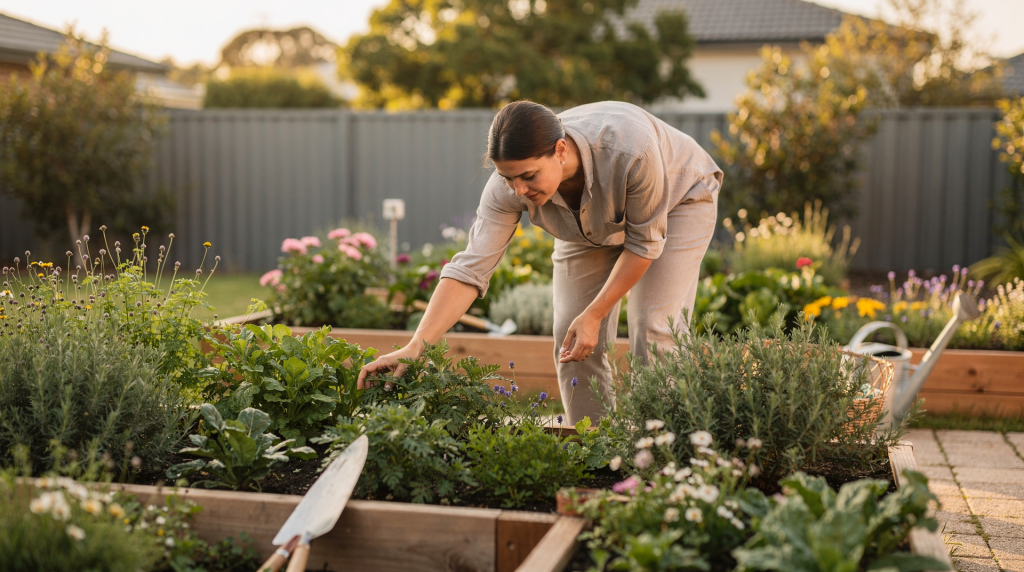
There is a quiet, practical form of medicine growing in backyards, on balconies, and in community plots across the country. Gardening doesn’t ask you to change into workout gear or follow a program. It simply invites you to show up, use your hands, and pay attention to something living. In return, it gives you movement that feels meaningful and a mental reset that few other activities can match.
For years, I studied how food and supplements influence metabolic health—how the right nutrients can steady blood sugar and restore energy. But the deeper I looked, the more I realized that health isn’t just about what we consume. It’s also about the spaces we inhabit. A home surrounded by soil, plants, and open air can do as much for insulin sensitivity and cortisol levels as any carefully planned meal. Gardening sits right at that intersection: it’s a physical practice embedded in your immediate environment, one that quietly reshapes your daily rhythms.
If you want a habit that supports both body and mind, gardening is unusually effective because it blends light-to-moderate physical activity with time in fresh air, sunlight, and living green space. The benefits are not abstract—they show up in your muscles, your mood, and your ability to handle stress.
Why Gardening Works So Well for Wellness
Gardening combines three things that many people struggle to get consistently: movement, attention, and recovery. You are using your body, focusing your mind on a simple task, and stepping away from screens and constant mental noise. This triad is rare in modern life, where physical effort is often separated from purpose and mental rest feels like an afterthought.
Unlike a formal workout, gardening feels practical. You are not “exercising” for exercise’s sake. You are digging, planting, carrying, pruning, raking, watering, and weeding—and those movements add up. The fact that you’re improving your living space while doing it adds a layer of satisfaction that a treadmill simply cannot offer. From a wellness-first perspective, this matters enormously: the environment you shape becomes the environment that shapes you back.
The movement is real
A typical gardening session can involve squats, lunges, lifting, carrying, bending, pushing, and twisting. That means your legs, arms, core, and grip all get involved. This isn’t isolated muscle work—it’s integrated, functional movement that trains your body the way it actually operates in daily life. When you choose a home with garden space, you’re essentially choosing a built-in movement studio that requires no membership and no commute.
Many gardening tasks qualify as moderate-intensity activity, and some—like carrying mulch, using a wheelbarrow, or shoveling—can become more demanding than people expect. I’ve seen clients who moved from dense urban apartments to small-town properties with gardens report noticeable improvements in their overall stamina within weeks, simply because they were moving more without consciously “exercising.”
The stress relief is real too
Gardening routines are repetitive in a good way. Watering, weeding, and trimming can create a steady, calming rhythm that helps ease tension and distract the mind from stressors. This rhythmic quality taps into something primal—our nervous systems respond to predictable, gentle patterns, whether it’s the sound of waves or the motion of pulling weeds row by row.
Time outdoors also matters. Being in a natural setting has been linked with lower heart rate, reduced muscle tension, and a better sense of well-being. When your home includes access to green space, you’re more likely to get these micro-doses of nature daily, not just on weekends. That cumulative exposure is where the real physiological shifts happen.
How Gardening Encourages More Movement
The biggest advantage of gardening is that it makes movement feel purposeful. Instead of forcing yourself to “work out,” you are completing visible tasks that improve your space. This shift in framing is powerful: you’re not punishing your body for sitting too long; you’re caring for a piece of land that, in turn, cares for you.
I often think about this when I walk through wellness-oriented neighborhoods or rural properties where gardens are integrated into the home’s design. The people who live there aren’t necessarily fitness enthusiasts. They’re just people whose surroundings naturally prompt them to bend, lift, carry, and walk—movements that keep their metabolisms active and their joints mobile without a second thought.
Common garden tasks and what they do
| Task | Main movement benefit | Wellness value |
|---|---|---|
| Weeding | Squatting, kneeling, reaching | Builds mobility and lower-body endurance |
| Digging | Upper-body effort, core engagement | Strengthens arms, shoulders, and trunk |
| Carrying soil or mulch | Loaded walking and lifting | Trains functional strength |
| Raking | Repetitive upper-body movement | Supports shoulder and back activity |
| Watering | Gentle carrying and walking | Keeps you moving without high strain |
| Pruning | Standing, reaching, hand control | Improves fine motor use and posture |
| Wheelbarrow work | Pushing and stabilizing | Full-body effort with balance demands |
Gardening is especially valuable because it uses “real-world” movement patterns. You bend, lift, carry, reach, and walk—exactly the kinds of actions that help people stay capable in everyday life. These are the movements that keep you independent as you age, the ones that determine whether you can carry groceries, play with grandchildren, or maintain your home without strain.
Why this matters more than people think
Many adults sit for long periods and then try to “make up for it” with a gym session. Gardening reduces that gap by spreading movement throughout the week in smaller, practical doses. This distributed approach to physical activity aligns better with how our bodies evolved to move—frequently, variably, and with purpose.
That matters because frequent gardening has been associated with greater overall physical activity and better wellbeing. When I consult with families relocating to eco-friendly neighborhoods or country homes, I always point out that a property’s garden potential is as much a health asset as its air quality or walkability score. It’s an invitation to move that’s built right into your daily landscape.
How Gardening Helps Reduce Stress
Stress relief from gardening comes from both the body and the brain. On the physical side, moderate activity can help lower stress-related tension—muscles that have been braced all day finally get to work and then release. On the mental side, the work gives your attention a simple, concrete target, which is the opposite of the scattered, multi-tab mental state many of us live in.
1. It lowers mental overload
When you are focused on planting seedlings or pulling weeds, your attention shifts away from rumination. That break from overthinking can be surprisingly restorative. I’ve noticed this in my own transition from city life to a small rural town: the garden became a place where my mind could finally stop churning through to-do lists and simply attend to what was in front of me—soil texture, leaf color, the weight of a watering can.
2. It creates a sense of control
Stress often feels worse when life feels chaotic. A garden gives immediate feedback: you water, plant, mulch, prune, and see change over time. That visible progress can feel grounding. In a world where so many outcomes are delayed or ambiguous, a garden offers tangible cause-and-effect. You do something, and something grows. That kind of agency is quietly therapeutic.
3. It supports mood through movement
Moderate exercise is linked with lower baseline cortisol and greater endorphin activity, which helps explain why gardening often feels calming instead of draining. Unlike high-intensity workouts that can spike stress hormones temporarily, gardening tends to operate in that sweet spot where physical effort soothes rather than stimulates.
4. It reconnects you with nature
Even short periods outdoors can improve mood and reduce the physical signs of stress. Gardening gives you repeated exposure to fresh air, light, and natural surroundings, which reinforces the calming effect. This is one reason I advocate for homes with easy outdoor access—not just a deck or patio, but actual earth where you can plant something. The difference between looking at nature through a window and putting your hands in it is substantial.
Best Gardening Activities for Beginners
If you are new to gardening, start with tasks that are easy to maintain and enjoyable enough to repeat. Consistency matters more than intensity. The goal is to build a relationship with your outdoor space that feels nourishing, not overwhelming.
- Watering containers or raised beds
- Pulling weeds for 10–15 minutes at a time
- Planting herbs or starter seedlings
- Deadheading flowers
- Light pruning
- Carrying small bags of soil or compost
- Walking the yard to inspect plant growth
These tasks build a habit of movement without requiring a big time commitment or advanced tools. They’re also forgiving—if you miss a day, nothing catastrophic happens. That low-stakes quality makes gardening sustainable in a way that rigid exercise programs often aren’t.
A Simple Gardening Routine for Movement and Stress Relief
If the goal is wellness, the best routine is one you can repeat several times a week. Gardening works especially well when it becomes a short, regular ritual rather than an occasional big project. The ritual aspect is key: your nervous system starts to anticipate the calm before you even step outside.
Try this 30-minute routine
- Spend 5 minutes warming up with easy walking and shoulder rolls.
- Spend 10 minutes on active work like weeding, digging, or raking.
- Spend 10 minutes on slower, repetitive tasks like watering or pruning.
- Spend 5 minutes finishing with cleanup, stretching, or simply standing and breathing outside.
This kind of structure keeps the session manageable while giving you both movement and mental decompression. It’s adaptable to any garden size—from a few raised beds on a suburban lot to a larger country plot. The point isn’t the scale; it’s the rhythm.
How Much Gardening Is Enough?
There is no magic number, but research suggests that even a few gardening sessions per week can improve stress, mood, and physical activity levels. The dose-response relationship here is gentle: more is often better, but a little still goes a long way.
Some studies report that frequent gardeners have higher wellbeing scores and lower perceived stress than non-gardeners. Other findings show that gardening a few times a week can increase moderate exercise and improve positive emotions. What I find compelling is that these benefits appear even when gardening is the primary form of physical activity—you don’t need to supplement it with a gym routine to see results.
For practical purposes, think in terms of:
- 20–30 minutes per session
- 2–4 sessions per week
- A mix of light and moderate tasks
- Small but consistent progress
That is enough to make gardening feel like a real wellness habit rather than a hobby you only return to when the weather is perfect. And when you’re choosing a home, consider whether the property supports this kind of regular, low-barrier outdoor engagement. A sprawling lawn that requires a riding mower and hours of maintenance may actually discourage the daily, bite-sized gardening that benefits health most.
Common Mistakes That Reduce the Benefits
Gardening is helpful, but the way you do it matters. A few simple mistakes can turn a restorative activity into frustration or strain. I’ve seen enthusiastic new homeowners dive into garden projects with the same intensity they applied to their careers, only to end up sore, discouraged, and avoiding the yard altogether.
Overdoing it on day one
Starting with several hours of heavy digging can lead to soreness or injury. Build up gradually. Your garden isn’t going anywhere, and your body needs time to adapt to new movement patterns.
Staying in one position too long
Constant bending or kneeling can stress the back, hips, and knees. Alternate tasks and change positions often. Think of it as cross-training for your joints.
Ignoring body mechanics
Use a wheelbarrow for heavy loads, keep tools close to your body, and bend from the hips and knees when possible. The way you move while gardening should reflect the same care you’d use in any physical practice.
Treating gardening like a race
The point is not speed. Slow, steady work usually creates more movement and less stress. Rushing through tasks not only increases injury risk but also undermines the calming, meditative quality that makes gardening so valuable for mental health.
Gardening only when overwhelmed
If gardening becomes a panic response instead of a routine, it may feel like another obligation. The best results come from regular, low-pressure sessions that are woven into your week, not reserved for moments of crisis.
Who Benefits Most from Gardening?
Gardening is useful for many people, but it is especially valuable for those who:
- Want more movement without formal workouts
- Spend long hours indoors or at a desk
- Feel stressed, mentally overloaded, or restless
- Need a low-cost way to stay active
- Prefer practical activities over gym-based exercise
- Want a lifestyle that supports calm and consistency
It can also be a good option for older adults, families, and people who are rebuilding activity after a sedentary period, as long as tasks are matched to current ability. In my work exploring wellness-oriented real estate, I’ve noticed that communities designed with shared gardens, green corridors, and private yard space tend to attract exactly these demographics—people who intuitively understand that their surroundings influence their health.
Safety and Practical Limits
Gardening is not risk-free, especially if you jump into heavy work too quickly. Protecting your body keeps the habit sustainable. The irony is that an activity meant to improve health can cause setbacks if approached carelessly.
Keep these points in mind
- Use gloves and supportive footwear
- Stay hydrated, especially in warm weather
- Protect your knees with pads or a stool
- Avoid sudden heavy lifting if you are deconditioned
- Break up long sessions into shorter blocks
- Be cautious with repetitive bending if you have back pain
If you have joint issues, balance concerns, or a medical condition that affects physical effort, choose lighter tasks and build slowly. Raised beds, ergonomic tools, and seated gardening options can make the practice accessible to nearly everyone. The key is to adapt the garden to your body, not the other way around.
Gardening as a Habit, Not a Project
The real value of gardening comes from repetition. One perfect weekend in the yard will not change much, but small, regular sessions can reshape how you move and how you feel. This is the same principle I apply when evaluating homes: a property that supports daily, effortless engagement with nature will do more for your long-term health than a dramatic landscape you only experience on Saturdays.
That is why gardening is so powerful from a wellness perspective: it is movement disguised as care. You are improving your home, supporting your health, and giving your nervous system a break at the same time. The garden becomes a partner in your wellbeing, not another task on your list.
Quick Checklist: Make Gardening Work for Your Health
- Choose 2–3 simple tasks you can repeat weekly
- Keep sessions short enough that you want to return
- Mix bending, carrying, walking, and reaching
- Pause before you feel overworked
- Use the time outdoors as a mental reset
- Focus on consistency, not perfection
FAQ
Does gardening count as exercise?
Yes. Many gardening tasks involve moderate physical activity, including digging, carrying, raking, and weeding. The energy expenditure is comparable to brisk walking or light cycling, but with the added benefit of functional, multi-directional movement.
How does gardening reduce stress?
It helps through movement, time outdoors, repetitive calming tasks, and the mental break that comes from focusing on simple, tangible work. The combination of physical exertion and sensory engagement—the smell of soil, the feel of leaves, the sound of birds—creates a multi-layered relaxation response.
How often should I garden for health benefits?
A few sessions per week can be enough to support movement and stress relief, especially if the work is regular and varied. The key is consistency over intensity; a little bit several times a week outperforms a marathon session once a month.
Is gardening good if I do not like traditional exercise?
Yes. Gardening is often easier to stick with because it feels useful and enjoyable rather than forced. The sense of purpose and visible progress provides intrinsic motivation that abstract fitness goals often lack.
Can light gardening still help?
Yes. Even watering, pruning, and light weeding can support movement and create a calmer mental state when done regularly. The cumulative effect of these gentle activities should not be underestimated—they keep you mobile, outdoors, and engaged with your environment.
Conclusion
Gardening is more than a hobby. It is a practical way to move your body, lower stress, and build a healthier daily rhythm without needing a formal fitness plan. When I think about the homes that best support long-term wellness, they almost always include some form of garden—whether it’s a few containers on a sunny patio or a half-acre of vegetables and flowers. The common thread is that the space invites you outside, into movement, into contact with living things.
The best approach is simple: start small, stay consistent, and let the work of caring for plants support the care of your own health. Choose a home that makes this easy, and you’ve made one of the most significant wellness decisions possible—one that pays dividends every time you step outside and put your hands in the soil.