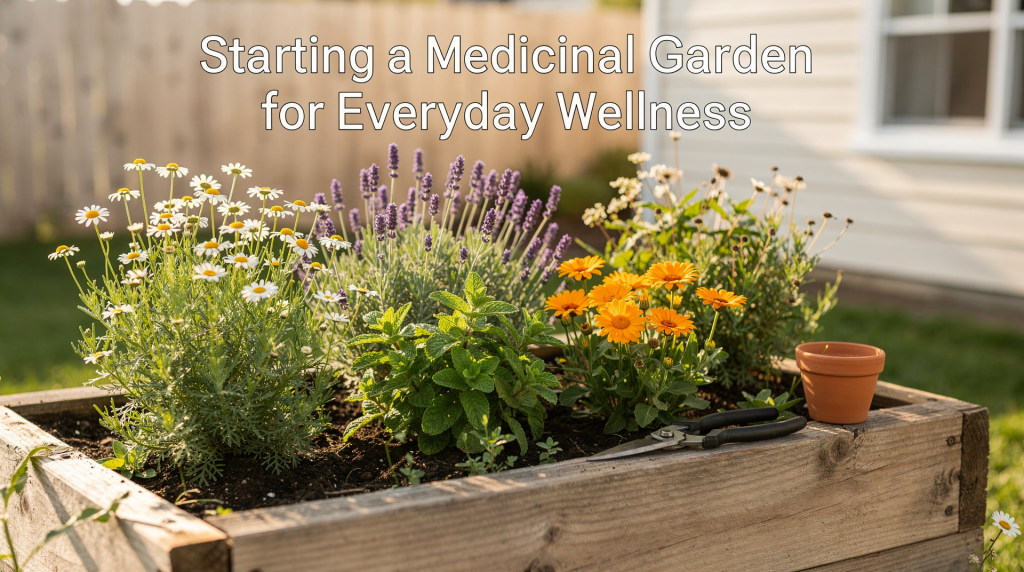
# Starting a Medicinal Garden for Everyday Wellness
There’s a quiet shift that happens when you stop treating your outdoor space as mere landscaping and start seeing it as part of your daily health infrastructure. A medicinal garden doesn’t demand acreage or expert botany—it asks for a small patch of sun, a handful of reliable plants, and the willingness to build a routine around growing things you’ll actually use. Over years of writing about both metabolic health and the places people call home, I’ve come to see a well-planned herb garden as one of the most underrated wellness features a property can offer. It costs little, adapts to nearly any setup, and delivers something no supplement bottle can replicate: a tangible, seasonal rhythm of care and harvest that pulls you outdoors and keeps you connected to what you’re putting in your body.
The key is to start small, choose reliable plants, and treat the garden as a long-term wellness habit—not a quick fix.
## What a medicinal garden is really for
A medicinal garden is not a pharmacy replacement. It is a focused herb garden designed to support everyday comfort and routines: calming teas, minor skin care, digestive support, and aromatic plants that can improve the experience of being outdoors and gardening. What makes it distinct from a purely ornamental bed is intention—every plant earns its place by serving a practical purpose in your household. When I consult with homeowners who are rethinking their outdoor spaces through a wellness lens, I often point out that a medicinal garden doesn’t need to be large or elaborate. It just needs to be used.
For beginners, the best gardens are built around three goals:
– Easy growing
– Everyday usefulness
– Low-risk, familiar plants
That approach keeps the garden practical and manageable. It also prevents the common trap of planting a dozen exciting herbs in spring and feeling overwhelmed by July. The gardens that stick are the ones that fit seamlessly into real life—the chamomile you actually steep before bed, the calendula you infuse into oil for dry skin, the mint you grab for afternoon tea. When a garden serves genuine daily needs, tending it stops feeling like a chore and starts feeling like a small, satisfying act of self-care.
## Best beginner medicinal herbs to grow
A strong starter garden usually includes herbs that are hardy, versatile, and easy to harvest in small amounts. These are plants that forgive beginner mistakes, bounce back from irregular watering, and still produce enough to make the effort worthwhile. Common beginner-friendly choices include chamomile, calendula, lemon balm, peppermint, yarrow, echinacea, thyme, sage, and lavender. Each brings something distinct to the table—some excel in teas, others in topical preparations, and a few pull double duty in the kitchen.
What I appreciate about this list is how many of these herbs thrive in the kinds of sunny, well-drained spots that are common around suburban homes, country properties, and even townhouse patios. You don’t need perfect soil or a greenhouse. You need a place that gets good light and a willingness to learn each plant’s preferences over time.
### Quick comparison of beginner herbs
| Herb | Common use | Growing note | Beginner value |
|—|—|—|—|
| Chamomile | Tea for relaxation | Likes sun and well-drained soil | Very easy |
| Calendula | Skin-soothing salves and oil infusions | Often grown as an annual | Easy and versatile |
| Lemon balm | Calming tea and aromatic use | Spreads quickly | Reliable but should be contained |
| Peppermint | Tea and scent use | Grows aggressively | Best in pots |
| Thyme | Culinary and mild traditional use | Handles dry conditions well | Low-maintenance |
| Sage | Kitchen and traditional use | Needs full sun and drainage | Good for sunny beds |
| Lavender | Aroma, drying, pollinators | Prefers dry, sunny conditions | Great if your site is sunny and dry |
| Echinacea | Decorative and traditional use | Perennial in suitable climates | Good long-term plant |
| Yarrow | Traditional garden herb | Tough once established | Useful in mixed beds |
## How to choose the right herbs for your space
The best herb list depends on your light, soil, and how you want to use the plants. I’ve seen beautifully curated plant lists fail because they were chosen for someone else’s climate and someone else’s habits. Matching herbs to your actual conditions—not your aspirations—is what makes a garden sustainable. This is the same principle I apply when evaluating properties: the most charming house in the wrong location will fight you every day, and the same goes for plants.
### Start with these questions
– How many hours of direct sun does the space get?
– Does water drain quickly or stay wet?
– Do you want tea herbs, topical herbs, culinary herbs, or a mix?
– Will the garden be in-ground, raised bed, or containers?
– Do you need plants that survive heat, drought, or cold winters?
Answering these honestly before you buy a single plant saves enormous frustration later. If your yard is shaded by mature oaks, sun-loving lavender will struggle no matter how carefully you tend it. If your soil holds water like a sponge, Mediterranean herbs like sage and thyme will rot at the roots. Work with what you have, and fill gaps with containers where needed.
Most medicinal herbs prefer at least six hours of direct sun and well-draining soil. If your soil stays soggy, raised beds or containers are usually the better choice. This is one of those non-negotiable fundamentals that separates thriving gardens from struggling ones.
## Where to plant: beds, raised beds, or containers
Each setup has a different advantage, and the right choice often depends as much on your property’s characteristics as on your gardening ambitions. I’ve worked with all three configurations across different homes, and the best setup is always the one that aligns with your soil, your space, and how much time you realistically have for maintenance.
### In-ground beds
Best for:
– Larger spaces
– Perennial herbs
– A more natural-looking garden
Limitations:
– Poor soil can take time to fix
– Spreading herbs can become invasive
In-ground planting makes sense on properties with decent native soil and room to expand. It’s the most naturalistic approach and tends to support stronger root systems over time. But if you’re dealing with compacted clay or builder’s fill—common in newer subdivisions—you’ll need to invest in soil improvement before anything will thrive.
### Raised beds
Best for:
– Heavy clay soil
– Better drainage
– Easy access and maintenance
Limitations:
– More upfront work
– Beds may dry faster in hot weather
Raised beds give you control over soil quality from day one, which is why they’re my go-to recommendation for first-time gardeners on challenging lots. They also warm up faster in spring, extending your growing window slightly. The trade-off is that they need more attentive watering during peak summer heat.
### Containers
Best for:
– Small yards, patios, and balconies
– Aggressive herbs like mint
– Easy control over soil quality
Limitations:
– Need more frequent watering
– Nutrients wash out faster
Containers are the great equalizer—they make a medicinal garden possible on a rental balcony, a compact patio, or any spot where digging isn’t an option. They’re also the smartest way to handle mint and lemon balm, which will colonize an in-ground bed with alarming enthusiasm if left unchecked.
For beginners, a mixed setup often works best: one raised bed for sun-loving herbs and a few pots for mint, lemon balm, or any plant that tends to spread. This hybrid approach gives you the benefits of both systems while keeping aggressive growers contained.
## A simple plan for your first medicinal garden
A practical beginner garden does not need dozens of plants. Three to five herbs are enough to start. I’ve watched too many enthusiastic new gardeners plant fifteen varieties in a single weekend, only to lose track of what’s what and end up with a tangled, underused bed by midsummer. Restraint at the beginning pays off in consistency later.
### Step-by-step setup
1. Pick a sunny spot with at least six hours of direct light.
2. Test drainage after rain or watering.
3. Improve the soil with compost if it is thin or exhausted.
4. Choose three to five herbs that match your climate.
5. Plant the least aggressive herbs in the ground and the spreaders in containers.
6. Mulch lightly to reduce weeds and protect moisture.
7. Label everything clearly.
8. Water deeply, then let the topsoil dry slightly before watering again.
9. Harvest in small amounts and observe plant response.
10. Expand only after you know what actually gets used.
That last step is the one most people skip. Living with a small garden for a full season teaches you what you genuinely reach for—and what just looks pretty in the bed. Let actual use guide your next planting decisions.
## What to grow first if you want real everyday use
If the goal is everyday wellness, prioritize plants you will actually reach for. This sounds obvious, but it’s surprisingly easy to get seduced by interesting herbs you’ll use twice a year while neglecting the workhorses that could improve your daily routines. Think about your actual habits: Do you drink tea in the evening? Do you deal with dry skin in winter? Do you cook with fresh herbs? Let those answers shape your plant list.
### A smart starter trio
– Chamomile for a calming evening tea
– Calendula for simple skin care projects
– Peppermint or lemon balm for fresh tea and scent
That combination covers three common wellness habits: rest, skin support, and daily tea. It’s a modest, manageable entry point that delivers tangible benefits without requiring specialized knowledge or elaborate processing. Once these three are thriving and integrated into your routine, you’ll have a much clearer sense of what to add next.
## Common mistakes to avoid
New gardeners often make the same errors, and most are easy to prevent. I’ve made several of these myself over the years, and they almost always stem from enthusiasm outpacing observation.
– Planting too many herbs at once
– Choosing herbs for their reputation instead of their growing conditions
– Overwatering sun-loving plants
– Letting mint or lemon balm spread unchecked
– Harvesting too much too early
– Using unidentified plants because the bed “looks full”
– Assuming every medicinal herb is safe for every person
A smaller, better-planned garden usually performs better than a crowded one. Crowding creates competition for light, water, and nutrients, and it makes harvesting and maintenance more difficult than they need to be. Give each plant room to breathe, and you’ll get healthier growth and a more pleasant gardening experience.
## Safety matters more than enthusiasm
Herbs can be useful, but “natural” does not automatically mean safe. This is a point I return to often, having spent years in the wellness space where enthusiasm sometimes outpaces caution. Some herbs are unsuitable during pregnancy, breastfeeding, surgery prep, or when taken with certain medications. The fact that a plant grows in your garden doesn’t make it benign in every context.
### Basic safety rules
– Use only plants you can positively identify
– Keep toxic plants out of a wellness garden
– Do not use concentrated herbal preparations casually
– Start with small amounts if trying an herb for the first time
– Check interactions if you take prescription medication
– Seek medical care for severe, persistent, or worsening symptoms
It is also wise to treat any garden herb as part of a broader wellness routine, not as a substitute for clinical care. A cup of chamomile tea can support relaxation, but it doesn’t replace addressing chronic sleep issues with a healthcare provider. The garden is a complement to good health practices, not a standalone solution.
## How to harvest and dry herbs properly
Harvesting correctly protects both the plant and the quality of what you collect. The goal is to gather at peak potency while leaving enough foliage for the plant to recover and continue producing. Rushing this step or taking too much at once can set a plant back for weeks.
### Basic harvesting rules
– Pick in dry weather
– Harvest in the morning after dew has dried
– Take no more than one-third of the plant at a time
– Use clean scissors or pruners
– Remove damaged leaves before drying
Morning harvests capture the plant’s essential oils at their most concentrated—after the dew evaporates but before the midday sun begins breaking down volatile compounds. It’s a small timing detail that makes a noticeable difference in the quality of dried herbs.
### Drying methods
– Air dry in small bundles
– Spread leaves in a single layer on screens
– Store fully dried herbs in airtight jars
– Keep jars out of heat and direct sunlight
If the herb feels soft or bends instead of crumbling, it is not dry enough yet. Rushing herbs into storage before they’re fully dry invites mold, which can ruin an entire jar. Patience at this stage preserves everything you’ve grown.
## Seasonal checklist for a beginner medicinal garden
A medicinal garden follows a predictable rhythm through the year, and having a loose checklist helps keep tasks from piling up. This is the same kind of seasonal awareness that makes any home function more smoothly—attending to small needs before they become problems.
### Spring
– Prepare soil
– Start seedlings indoors if needed
– Plant cold-sensitive herbs after frost risk passes
– Label every plant
### Summer
– Water consistently
– Pinch back fast growers
– Harvest regularly
– Watch for pests and powdery mildew
### Fall
– Dry and store the final harvest
– Cut back perennials as needed
– Add compost
– Mulch before cold weather
### Winter
– Review what was actually used
– Plan next year’s layout
– Order seeds early if necessary
– Replace weak or disappointing plants
The winter review is where the garden evolves. Noting which herbs you used constantly and which you barely touched gives you a clear blueprint for the following year. Gardens that improve season after season are gardens that get this reflective step right.
## Practical garden layout ideas
A functional layout is usually better than a decorative one. When you’re harvesting regularly, you want plants accessible, clearly labeled, and grouped in ways that make maintenance efficient. Aesthetics matter—a beautiful garden draws you outside—but they should serve function rather than override it.
### Example layout for a small yard
– Back row: echinacea, sage, lavender
– Middle row: chamomile, calendula, yarrow
– Front edge or pots: peppermint, lemon balm
### Example layout for containers
– One large pot: mint
– One medium pot: lemon balm
– One sunny box: calendula and chamomile
– One dry pot: thyme or sage
Group plants by water needs instead of mixing everything randomly. Mediterranean herbs like lavender, sage, and thyme prefer drier conditions, while mint and lemon balm appreciate more consistent moisture. Putting them in the same watering zone creates unnecessary stress for one group or the other.
## When a medicinal garden becomes a wellness habit
The real value of a medicinal garden is not only the herbs. It is the routine it creates: stepping outside, noticing seasonal changes, harvesting intentionally, and making simple care rituals part of ordinary life. There’s a kind of grounding that happens when you walk out in the morning to check on your chamomile or snip a few calendula blooms for drying. It pulls you out of your head and into the present moment—something that a well-designed home environment should actively encourage.
That is why small gardens matter. They are easy to maintain, easy to use, and easy to adapt as your needs change. A medicinal garden doesn’t need to be a major landscaping project. It can be a single raised bed, a cluster of pots on a sunny deck, or a strip along a south-facing wall. What makes it valuable is the daily ritual of tending and using it—a quiet, consistent wellness practice rooted right outside your door.
## FAQ
### What is the easiest medicinal herb to grow?
Chamomile, calendula, mint, and lemon balm are among the easiest beginner choices. They germinate readily, tolerate a range of conditions, and produce usable harvests without demanding expert care.
### Can I grow medicinal herbs in pots?
Yes. Pots are often the best option for mint, lemon balm, and small-space gardens, especially when drainage is important. Container gardening also lets you position plants to follow the sun and bring tender herbs indoors during cold snaps.
### Do medicinal herbs need special soil?
Most do best in well-draining soil with moderate fertility. Heavy, wet soil causes problems for many common herbs. If your native soil is dense clay, amending with compost or switching to raised beds and containers will give you far better results.
### Should I start from seed or buy plants?
Buying young plants is usually easier for beginners. Seed works well too, but it can take more time and patience. Starting with established seedlings lets you focus on learning care and harvest rhythms before tackling propagation.
### Are medicinal herbs safe for everyone?
No. Safety depends on the plant, the dose, the form used, and the person using it. Pregnancy, medications, and chronic conditions all matter. Always research individual herbs thoroughly and consult a healthcare provider if you have specific concerns.
## Final takeaway
Start with a few useful, easy herbs, place them in the right light, and keep the design simple. A well-chosen medicinal garden can become one of the most practical wellness features of your home—small, productive, and genuinely useful every day. It doesn’t require a move to the countryside or a complete landscape overhaul. It just needs a sunny corner, a little patience, and the willingness to let your garden grow alongside your understanding of what supports your health. In a world that constantly pushes complicated solutions, there’s something quietly powerful about stepping outside and harvesting exactly what you need.